
Ever wonder why your intuition feels blocked? You’re closer than you think to hearing it clearly again – let’s uncover what’s in the way.
Intuition is one of those things everyone talks about, yet many people feel strangely disconnected from it.
You might find yourself sitting with a decision, feeling that you should know what to do… and yet your inner voice seems frustratingly quiet.
When that happens, it’s easy to assume something is wrong. Perhaps you’ve lost your intuition. Perhaps you’re simply not “intuitive enough”.
In reality, that’s rarely the case.
Most of the time, intuition isn’t gone – it’s simply being drowned out.
Stress, overthinking, emotional exhaustion, and outside opinions can all make it difficult to hear the subtle signals that normally guide you.
The good news is that intuition is not a rare gift reserved for mystics or seasoned witches. It’s a natural human ability that most of us can reconnect with once we understand what tends to block it.
Let’s explore the most common intuition blockers – and how you can gently find your way back to that quiet inner guidance.
Why Your Intuition Feels Blocked (And Why It’s Not Broken)
Before diving into the common blockers, it helps to understand something important: your intuition is almost certainly not broken.
Intuition doesn’t shout. It whispers.
It shows up as subtle impressions, quiet feelings, or a small sense of relief or resistance when you consider a particular option.
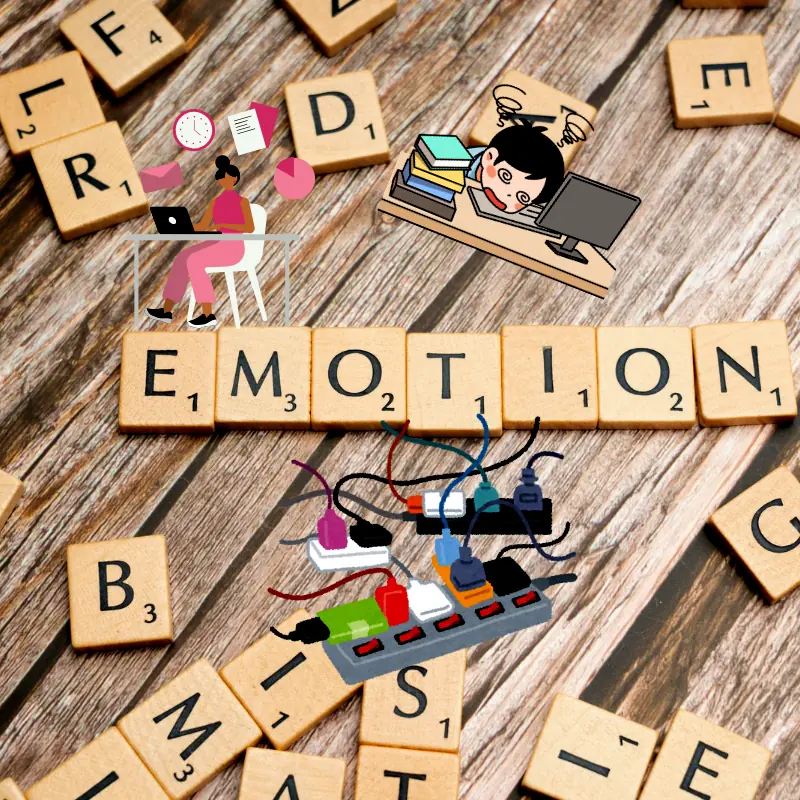
The challenge is that modern life is very loud.
Your mind is constantly juggling information, worries, expectations, and outside opinions. When all of that noise builds up, the quiet signals of intuition become difficult to notice.
Think of intuition less like a booming voice giving commands and more like a gentle compass. The compass is still working – you just need to slow down enough to read it.
How Overthinking Can Make Your Intuition Feel Blocked
One of the most common intuition blockers is simple overthinking.
When you’re facing a difficult choice, your mind naturally tries to solve the problem by analysing every possible outcome. You weigh the pros and cons, imagine different scenarios, and try to calculate the “perfect” decision.
While rational thinking is incredibly useful, it can sometimes crowd out your intuition.
Your brain keeps generating more information, more arguments, and more possibilities – until the quiet signal from your inner compass gets buried underneath all the analysis.
Intuition rarely arrives as a detailed spreadsheet of reasons.
More often, it appears as a simple sense that one direction feels more aligned than another.

Fear of Being Wrong
Many people silence their inner voice because they’re afraid of making the wrong decision.
They want certainty. They want guarantees.
Unfortunately, intuition doesn’t operate that way.
It doesn’t promise perfection or predict every outcome. Instead, it usually points toward the next honest step – the direction that feels aligned with who you are in this moment.
If you demand complete certainty before acting, you may end up ignoring the subtle signals that are trying to guide you forward.
Emotional Overload and Exhaustion
Exhaustion – whether physical, emotional, or mental – is one of the fastest ways to lose contact with your intuition.
When you’re burned out, overwhelmed, or carrying too much emotional weight, your nervous system shifts into survival mode. In that state, subtle awareness becomes difficult.
Your intuition hasn’t disappeared. It’s simply being overshadowed by the urgent need to rest and recover.
Sometimes the most powerful thing you can do is step away for a while.
Take a walk. Journal your thoughts. Spend time doing something creative or restorative.
Giving yourself genuine space to recharge often allows your inner voice to return naturally.
If this resonates with you, you might find it helpful to explore the idea of sacred rest more deeply in our article on Sacred Rest: Reclaiming Stillness in a Busy World.
Trying Too Hard to Hear Your Intuition
Ironically, trying too hard to connect with your intuition can also shut it down.
When people feel stuck, they often push harder. They meditate longer, analyse more deeply, or repeatedly ask themselves the same question in the hope that clarity will suddenly appear.
But intuition doesn’t respond well to force.
Trying to squeeze out an answer is a bit like trying to squeeze water from your hands – the harder you press, the more it slips away.
Intuition tends to appear when your mind relaxes and becomes receptive.
Sometimes the best approach is to stop chasing the answer for a while and allow your thoughts to settle.
Radical Self-Honesty: Connecting with Your Inner Voice
Your intuition is closely tied to your sense of self.
If you’re not being honest with yourself – about your feelings, your needs, or your desires – it becomes much harder to recognise the guidance that intuition offers.
For example, imagine asking yourself, “What’s the best thing for me to do right now?”
If you haven’t taken time to reflect on what truly matters to you, the answer may feel confusing or unclear.
This is why radical self-honesty is such a powerful practice. When you acknowledge your real thoughts and emotions, your inner compass has something meaningful to work with.
If you’d like to explore this idea further, you might enjoy reading Radical Self-Truth: The Most Underrated Witchcraft Skill.
Too Many External Opinions
Modern life offers an endless stream of advice.
Friends, family, social media, podcasts, and online “experts” are all eager to tell you what you should do.
While outside perspectives can sometimes be helpful, they can also drown out your own voice.
If you constantly seek reassurance or guidance from others, it becomes difficult to hear your own inner knowing.
This doesn’t mean you must ignore everyone else’s opinions – but creating occasional pockets of quiet can make a remarkable difference.
Turning off notifications, stepping away from social media, or spending time alone with your thoughts can help you reconnect with yourself.
How to Reconnect with Your Intuition
Once you understand what tends to block intuition, reconnecting becomes much easier.
Here are a few gentle practices that many people find helpful:
💡Pause external input
Give yourself moments without constant information or advice.
💡Ask better questions
Instead of asking “What should I do?”, try asking “What would feel honest for me right now?”
💡Notice your body’s responses
Your body often reacts before your mind catches up. Relief, tension, excitement, or resistance can all be intuitive signals.
💡Write things down
Journalling allows you to explore thoughts without interruption and often reveals patterns or insights you might otherwise miss.
💡Create restorative space
Activities that calm your mind – walking, drawing, meditation, or simply sitting quietly – can help intuition surface naturally.
The key is not to force answers but to create space where they can emerge.
How Tarot Can Help Provide Clarity
Even with all the practices above, there are times when your thoughts feel stuck in a loop.
You may find yourself circling the same question again and again, analysing every angle but never quite arriving at clarity.
When that happens, it’s often not because you lack intuition — it’s simply that your mind has become too tangled in the problem to see it from a fresh perspective.
This is where tools like tarot can be surprisingly helpful.
Contrary to popular belief, tarot isn’t about predicting the future or handing down absolute answers.
Instead, it acts as a reflective mirror.
The imagery and symbolism of the cards can highlight patterns, emotions, or perspectives you might not have considered before.
Sometimes even a single tarot card can reveal a new angle on a situation and help you break out of repetitive thinking.
That fresh perspective can be enough to help you notice what your intuition has been trying to tell you all along.

A Gentle Way to Gain Insight
Many people find that starting with a simple one-card reflection is an approachable way to explore tarot guidance.
A Single-Card Clarity reading focuses on one specific question or situation and offers a personalised interpretation designed to highlight patterns, perspectives, or insights you might not have noticed on your own. Each reading is created individually, with careful attention to your question and energy – thoughtfully interpreted rather than drawn from generic meanings or templates.
For those new to tarot, it’s a gentle, low-pressure introduction. And often, that single shift in perspective is enough to quiet the mental noise and reconnect you with what your intuition has been trying to say all along.
If you’ve been going in circles with the same question, sometimes a fresh, grounded perspective is all it takes to unlock clarity.
✨ Need a Little Clarity?
If your intuition feels quiet or you’re circling the same question, a Single-Card Clarity tarot reading can offer a fresh perspective and highlight what may be hidden beneath the surface.
It’s a simple, focused reading delivered via email – ideal when you’re seeking guidance without committing to a full session.
Your Intuition Is Still There
If your intuition feels blocked right now, remember that it hasn’t disappeared.
Most of the time it’s simply waiting for space – space away from stress, overthinking, and outside noise.
By slowing down, reconnecting with yourself, and allowing room for reflection, that quiet inner guidance can begin to emerge again.
Your intuition doesn’t demand perfection. It simply offers direction.
And sometimes, all it takes is a moment of clarity to hear it once more.
If you’d like to hear this explored aloud, the companion video is embedded above.
You’re also welcome to continue the conversation in the comments on YouTube.
Until next time, may your path be clear, your goals aligned, and your momentum strong.